

The S-Type Cultivator: Steady Support in Your Ministry
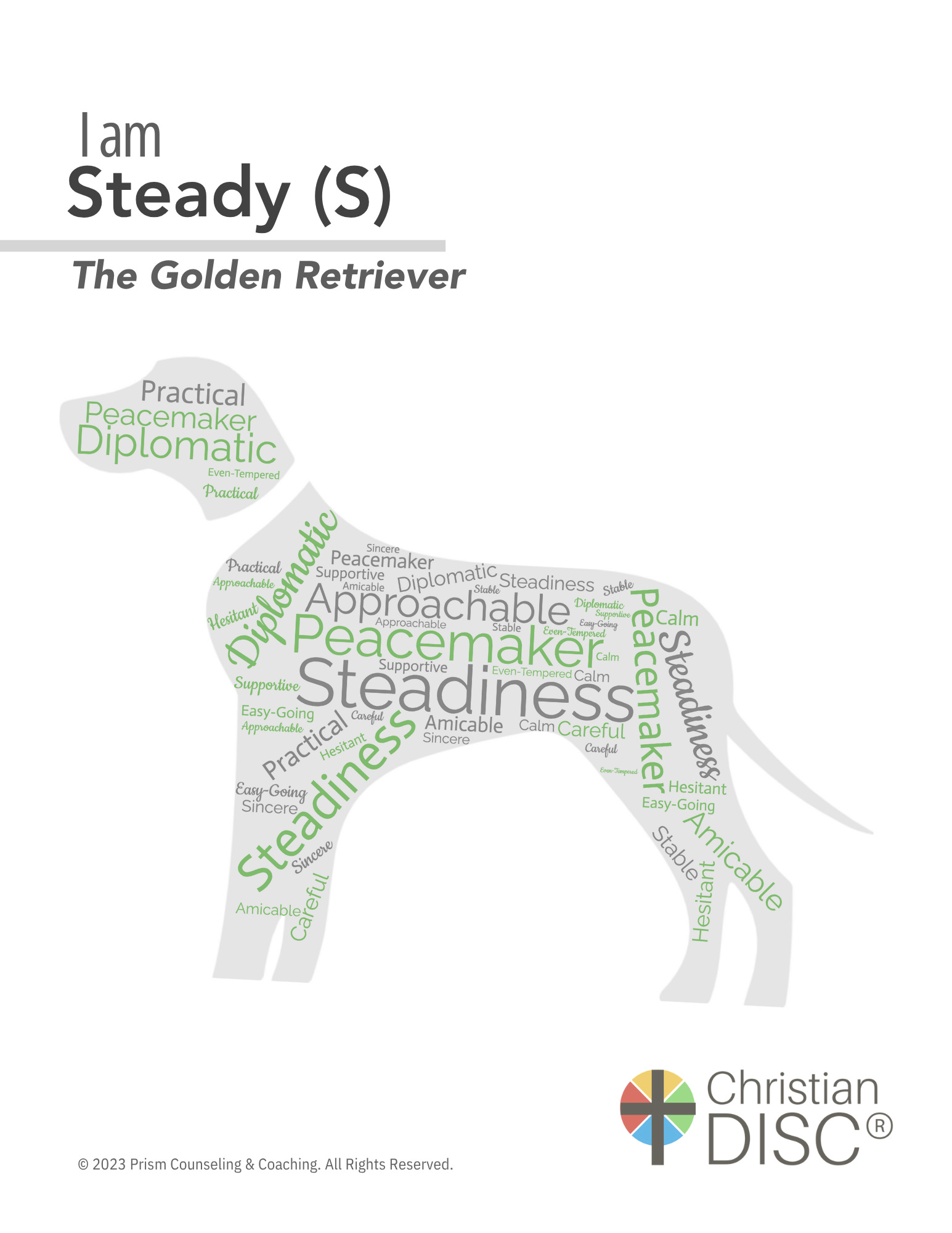
Hey friend! Today, we’re exploring the S-Type personality in our Sacred Design series. If you or someone you work closely with has strong Steady tendencies, this post will help you understand how God uniquely designed this personality for His purposes.
New to the DISC personality framework? Check out our Sacred Design: The Cultivator’s DISC Personality Guide for an overview of all four types and the biblical foundation for understanding personality in ministry.
S-types are the supportive, stable, and sincere personalities who naturally create harmony and provide consistent care for others. They’re the reliable gardeners of the personality world—patiently cultivating relationships, maintaining peaceful environments, and providing the steady presence that helps ministries thrive over the long haul.
The S-Type: Consistent Support and Stability
The Steady personality is characterized by a natural orientation toward people, peace, and consistent process. S-types tend to be warm and approachable in communication, focused on relationships and harmony, thoughtful before making decisions, comfortable in familiar settings, patient with processes and people, willing to serve behind the scenes, and motivated by appreciation and security.
When you meet an S-type, you’ll often notice their calm presence, their attentiveness to your needs, and their genuine interest in your well-being. They don’t seek the spotlight but create the supportive foundation that enables others to thrive, seeing stable relationships as the bedrock of meaningful ministry.
Biblical Examples of S-Types
Scripture gives us several beautiful examples of S-type personalities whom God used to provide crucial support and stability:
Ruth demonstrated classic S-type traits in her loyal commitment to Naomi, her patient, consistent work ethic in Boaz’s fields, and her willingness to adapt to a new culture while maintaining her core values. Her famous words, “Where you go I will go,” reflect the S-type’s steadfast loyalty.
Abraham shows S-type qualities in his patient endurance through years of waiting for God’s promise, his preference for peace in resolving conflict with Lot, and his consistent faithfulness over the long journey of faith. His steady obedience built the foundation for God’s covenant people.
Mary (mother of Jesus) exhibits S-type tendencies in her humble acceptance of God’s plan, her thoughtful pondering of events rather than impulsive reactions, and her faithful presence throughout Jesus’ life and ministry, even at the foot of the cross when others had fled.
These biblical examples remind us that God has always used S-type personalities to accomplish His purposes, particularly when patient endurance, faithful support, and relational harmony were needed.
Core Strengths: How S-Types Reflect God’s Character
S-type personalities beautifully reflect certain aspects of God’s character. Their strengths aren’t accidental but purposefully designed to display these divine attributes:
The loyal faithfulness that characterizes S-types mirrors God’s covenant faithfulness to His people. Throughout Scripture, we see God’s unwavering commitment even when His people stray. Lamentations 3:22-23 celebrates this attribute: “Because of the LORD’s great love we are not consumed, for His compassions never fail. They are new every morning; great is Your faithfulness.” S-types reflect this aspect of God’s character when they maintain steady commitment through challenging circumstances, providing a reliable presence that others can count on.
The patient endurance natural to S-types reflects God’s longsuffering nature with humanity. 2 Peter 3:9 reminds us that “The Lord is not slow in keeping His promise, as some understand slowness. Instead, He is patient with you, not wanting anyone to perish, but everyone to come to repentance.” S-types mirror this divine patience in how they give people time to grow and change, maintaining supportive presence without rushing processes or demanding immediate results.
The peaceable spirit of S-types reflects God’s shalom—His desire for wholeness, harmony, and right relationships. Jesus emphasized this in the Beatitudes, saying “Blessed are the peacemakers, for they will be called children of God” (Matthew 5:9). S-types carry this peace-creating presence into ministry contexts, often serving as bridges between different perspectives and calming influences in tense situations.
The consistent care that S-types naturally provide reflects God’s attentive shepherding of His people. Psalm 23 describes this tender care: “The LORD is my shepherd, I lack nothing. He makes me lie down in green pastures, He leads me beside quiet waters, He refreshes my soul.” S-types mirror this shepherding heart when they notice and respond to others’ needs, creating environments where people feel genuinely cared for and supported.
When S-types embrace and steward these strengths with confidence, they become powerful instruments for God’s kingdom work, creating stability that allows ministries to thrive, relationships to heal, and long-term fruit to develop.
Growth Areas: Biblical Wisdom for Development
Every personality has areas where growth and balance are needed. For S-types, certain tendencies may need to be complemented with biblical wisdom and additional virtues:
While S-types naturally prioritize harmony, they sometimes avoid necessary conflict or changes that might temporarily disrupt peace. Jesus reminds us in Matthew 10:34 that “I did not come to bring peace, but a sword”—indicating that sometimes truth must precede harmony. Growing in the courage to address problems directly helps S-types create genuine peace based on truth rather than temporary calm that masks underlying issues. Learning to see constructive conflict as a pathway to a deeper relationship rather than a threat helps S-types facilitate authentic community.
The S-type’s desire to support others sometimes leads to difficulty establishing personal boundaries or expressing their own needs. Mark 6:31 shows Jesus recognizing human limits when He tells His disciples, “Come with Me by yourselves to a quiet place and get some rest.” Developing the ability to communicate personal needs and establish healthy boundaries allows S-types to serve sustainably rather than moving toward burnout or resentment. Remembering that even Jesus had boundaries helps S-types see their own limitations as God-honoring rather than selfish.
The S-type’s comfort with established processes can occasionally lead to resistance to necessary changes or new approaches. Isaiah 43:19 reminds us that God says, “See, I am doing a new thing! Now it springs up; do you not perceive it?” Developing greater comfort with change and innovation helps S-types remain responsive to God’s fresh work rather than clinging to familiar patterns simply because they’re established. Looking for God’s hand in new developments rather than automatically resisting them allows S-types to combine their gift of stability with appropriate adaptability.
Finally, S-types often hesitate to step into leadership or share their valuable insights, preferring supportive roles behind the scenes. First Peter 4:10 encourages us: “Each of you should use whatever gift you have received to serve others, as faithful stewards of God’s grace in its various forms.” Growing in confidence to lead from their natural strengths of consistency, care, and peacemaking allows S-types to influence ministry culture more broadly. Recognizing that their relational wisdom and steady perspective are needed in leadership circles helps S-types step forward when appropriate rather than holding back valuable contributions.
These growth areas aren’t weaknesses to be ashamed of but opportunities for S-types to become more complete reflections of Christ’s character, combining their natural strengths with complementary virtues that create a more balanced and effective ministry presence.
Relationship Dynamics: How S-Types Interact with Others
Understanding how S-types relate to each of the four personality tendencies can help create healthier team dynamics and more effective ministry partnerships.
When S-types and D-types collaborate, they bring together stability and direction in a powerful balance. S-types appreciate the D-type’s clarity and decisiveness, while D-types value the S-type’s reliable follow-through and relational wisdom. This relationship thrives when D-types take time to explain the “why” behind changes and decisions, while S-types help D-types consider how implementation affects people. The S-type’s patient, steady approach balances the D-type’s driving pace, while the D-type’s clear direction helps the S-type navigate changes with greater confidence. Together, they create ministry approaches that combine clear vision with sustainable implementation.
The S-type and I-type pairing creates a relationally rich environment with complementary strengths. S-types provide consistency and follow-through, while I-types bring energy and new ideas to the relationship. This partnership flourishes when I-types respect the S-type’s need for stability and advance notice before changes, while S-types recognize the value of the I-type’s enthusiasm and fresh approaches. The S-type helps the I-type implement ideas consistently, while the I-type helps the S-type embrace new possibilities with greater confidence. Their shared people-focus creates strong relational foundations for ministry.
Two S-types working together create incredibly stable, harmonious environments where relationships are nurtured and processes run smoothly. They naturally appreciate each other’s reliable, supportive approach and preference for harmony. However, this pairing may need to be intentional about addressing problems directly rather than avoiding difficult conversations. Success comes when they create a safe space for honest communication, establish methods for navigating necessary changes, and occasionally seek outside perspectives to avoid getting too comfortable with established patterns. When these elements are in place, dual S-type partnerships can create remarkably consistent, nurturing ministry environments.
When S-types and C-types collaborate, they bring together a supportive relationship and accurate detail in valuable ways. S-types appreciate the C-type’s thoroughness and commitment to quality, while C-types value the S-type’s patience and relational sensitivity. This partnership thrives when S-types provide the relational buffer that helps C-types communicate technical information more accessibly, while C-types help S-types establish clear processes and systems for consistency. Their shared preference for established processes creates stability, while their different focuses (people vs. tasks) create a helpful balance in approach.
Understanding these dynamics helps S-types build stronger relationships and more effective ministry teams, leveraging the strengths of each personality rather than creating unnecessary friction.
The S-Type in the Garden Spaces
Let’s explore how S-types naturally navigate each area of our Genesis Framework and how they can thrive in each garden space:
In The Light Garden (Vision & Purpose)
S-types bring valuable gifts to The Light Garden through their ability to maintain focus on core mission and values over time. While they may not be the first to generate new vision, they excel at preserving and nurturing foundational purpose with faithful consistency. Their relational orientation helps them understand how vision connects to people’s needs and experiences.
Growth in this garden space comes as S-types learn to contribute their insights to vision formation rather than simply supporting others’ ideas. Taking time to articulate their own sense of calling and purpose helps them participate more fully in direction-setting. Developing comfort with exploring new possibilities alongside maintaining established values allows S-types to help create a vision that honors both continuity and fresh direction.
In The Waters Retreat (Boundaries & Structure)
S-types often thrive in The Waters Retreat, as they naturally understand the importance of healthy structure and boundaries in sustaining ministry. They excel at creating relational boundaries that maintain harmony while protecting people from burnout. Their natural consistency helps establish reliable systems that support ministry function.
Growth opportunities in this garden space include developing clearer boundaries around their personal capacity rather than overextending to meet others’ needs. Learning to communicate their own limits clearly and directly helps S-types serve sustainably without resentment. Creating structures that facilitate necessary change alongside helpful stability allows them to support dynamic rather than static ministry environments.
In The Fruitful Fields (Productivity & Output)
S-types bring unique gifts to The Fruitful Fields through their consistent, methodical approach to productivity. They excel at maintaining steady output over time rather than working in unsustainable bursts. Their attention to quality and detail ensures that ministry production reflects excellence and care. Their supportive approach helps create collaborative environments where everyone contributes.
Growth in this garden space comes through developing comfort with more flexible approaches when circumstances require adaptation. Learning to adjust established processes when they no longer serve the ministry’s purpose helps S-types maintain relevance and effectiveness. Balancing their natural thoroughness with appropriate pace ensures that perfect doesn’t become the enemy of good enough in ministry production.
In The Luminaries Lookout (Visibility & Timing)
S-types approach The Luminaries Lookout with a thoughtful, measured perspective that balances the sometimes frenetic pace of platform building. Their genuine, authentic presence creates trust rather than mere visibility. They excel at behind-the-scenes support that makes others’ visibility possible and sustainable.
Growth opportunities include developing comfort with appropriate levels of personal visibility rather than always staying behind the scenes. Recognizing when their voice needs to be heard more broadly helps S-types extend their influence beyond immediate relationships. Learning to navigate change in public ministry contexts with confidence rather than hesitation allows their steadying presence to impact wider audiences.
In The Living Waters (Community & Expression)
The Living Waters is often where S-types feel most at home, as their relational orientation and genuine care create authentic community naturally. They excel at maintaining long-term relationships, noticing and responding to others’ needs, and creating environments where people feel safely supported. Their listening skills and non-judgmental presence invite honest sharing and vulnerability.
Growth in this garden space comes through developing comfort with facilitating community across different personality types and perspectives. Learning to address relational problems directly rather than hoping they’ll resolve on their own helps S-types create a truly healthy community rather than surface harmony. Sharing their own thoughts and feelings more openly allows for a mutual relationship rather than one-sided support.
In The Stewardship Sanctuary (Resources & Multiplication)
S-types bring valuable strengths to The Stewardship Sanctuary through their careful, consistent approach to resource management and their commitment to sustainable growth. They naturally understand stewardship as faithful care rather than mere utilization, and they excel at creating systems that maintain ministry resources with integrity over time.
Growth opportunities in this space include embracing appropriate risk alongside careful management. Learning to step into new ventures when God leads, even when outcomes aren’t guaranteed, helps S-types participate in multiplication that extends beyond current boundaries. Developing comfort with measuring and tracking impact helps them communicate the value of their steady approach in terms that resonate with different stakeholders.
In The Sabbath Grove (Rest & Renewal)
S-types have a unique relationship with The Sabbath Grove. While they naturally understand the importance of consistency and may establish regular rhythms, they sometimes struggle to truly rest rather than continuing to attend to others’ needs. Their strengths include creating restful environments for others and maintaining sustainable patterns that prevent burnout.
Growth in this garden space comes through embracing personal rest as a divine command rather than an optional indulgence. Learning to receive care rather than always providing it helps S-types experience true renewal. Developing comfort with unstructured time and spontaneity within rest creates more complete refreshment that goes beyond mere routine. Recognizing that their own restoration ultimately serves others helps S-types prioritize Sabbath without guilt.
Practical Recommendations for S-Type Ministers
If you have S-type tendencies, here are some practical recommendations to help you steward your unique design for maximum kingdom impact:
Your consistent, supportive presence is a profound gift to ministry—embrace it confidently as divine design rather than seeing it as less valuable than more visible leadership styles. Jesus Himself emphasized faithful service and described greatness in terms of serving others (Matthew 20:26-28). Your steady, supportive approach reflects important aspects of Christ’s own ministry values.
Consider developing comfortable approaches for addressing necessary conflicts or changes. This might include preparing thoughtful language in advance, focusing on shared values and goals during difficult conversations, starting with appreciation before addressing concerns, or using writing to organize thoughts when verbal confrontation feels challenging. These approaches help you maintain your relational sensitivity while still addressing important issues directly.
Your ministry will likely thrive when you establish clear boundaries around your capacity and communicate them with confidence. Practice phrases like, “I’d like to help with that, but I need to check my current commitments first,” or “I value supporting this project, but I’ll need to step back from another responsibility to do so.” Remember that Jesus Himself established boundaries around His time, energy, and focus—your limitations aren’t selfish but simply human.
While your preference for established processes serves ministry well, balance it with openness to necessary innovation. Create regular times to evaluate whether current approaches still serve their intended purpose effectively. Invite perspectives from those who see things differently, and look for the opportunities within changes rather than focusing solely on what might be lost. Remember that God’s faithfulness remains constant even when methodologies evolve.
Your natural humility sometimes keeps your valuable insights hidden. Practice sharing your perspective more regularly, perhaps starting in safer settings before speaking in larger groups. Remember that your relational wisdom, practical experience, and steady perspective are needed voices in ministry conversations. Consider how withholding your insights might actually deprive others of valuable guidance rather than practicing humility.
Your gift for supporting others is beautiful, but ensure you’re also receiving support rather than always being the giver. Identify people with whom you can be fully authentic about your own needs and challenges. Schedule regular check-ins with trusted friends who will ask how you’re really doing. Create structures that ensure you receive care rather than waiting for others to notice your needs.
Finally, develop a Sabbath practice that includes genuine rest rather than different forms of service. Identify activities that provide true renewal for your specific personality—whether quiet reflection, time in nature, creative expression without pressure, or meaningful connection with close friends and family. Give yourself permission to be unavailable and unproductive during these times, recognizing that rest itself is a sacred activity.
Want to Know Your Type for Sure?
While reading the profiles can help you identify your likely tendencies, a professional assessment provides a more accurate and nuanced understanding of your specific personality blend.
I offer the Christian DISC Assessment, which provides a comprehensive report of your personality tendencies, including:
Your specific blend of all four types
Detailed insights about your natural strengths
Biblical perspectives on your personality
Personalized growth recommendations
Communication tips for different relationships
This assessment creates a solid foundation for understanding how to align your ministry and creative work with your God-given design.
Embracing Your S-Type Design
Friend, if you have S-type tendencies, remember that God created you with your supportive, steady, sincere personality for a purpose. Your ability to create stable environments, maintain faithful presence, and care genuinely for others reflects important aspects of His character and serves vital functions in His kingdom.
The world needs S-type cultivators who can:
Provide the consistent care that helps ministries thrive over time
Create harmonious environments where people feel genuinely valued
Maintain focus on core values amid changing circumstances
Build the relational foundations that sustain kingdom work
Your personality isn’t less spiritual or impactful than more visible types—it’s a divine design, crafted with intention and purpose. When you embrace your S-type tendencies while growing in complementary virtues, you become a powerful instrument in God’s hands, creating stability and nurturing relationships with both faithfulness and wisdom.
As you continue your ministry journey, remember that the goal isn’t to become less of an S-type but to become a more complete, Christ-like version of the S-type God created you to be—combining your natural relational gifts with appropriate boldness and adaptability.
With grace and joy,
Antonisha
Explore More in the Sacred Design Series:
The I-Type Cultivator: Inspirational Connection in Your Ministry
The C-Type Cultivator: Compliant Excellence in Your Ministry
Connect & Support
🌱 Join Our Community: Subscribe to receive The Sunday Sabbath newsletter and follow along on this soft, sacred, slow journey.
🤍 Support This Ministry:
Monthly Support: Join the Cultivator’s Circle to sustain this digital ministry with a monthly contribution.
One-Time Gift: Prefer a one-time donation? You can nurture this garden with a single contribution.
📚 Explore Resources: Discover books, assessments, and resources to support your creative journey in the Salty Page Books shop.
💬 Share Your Thoughts: I’d love to hear your perspective in the comments below.