

Day 3: The Fruitful Fields - Creating Consistent Creative Output
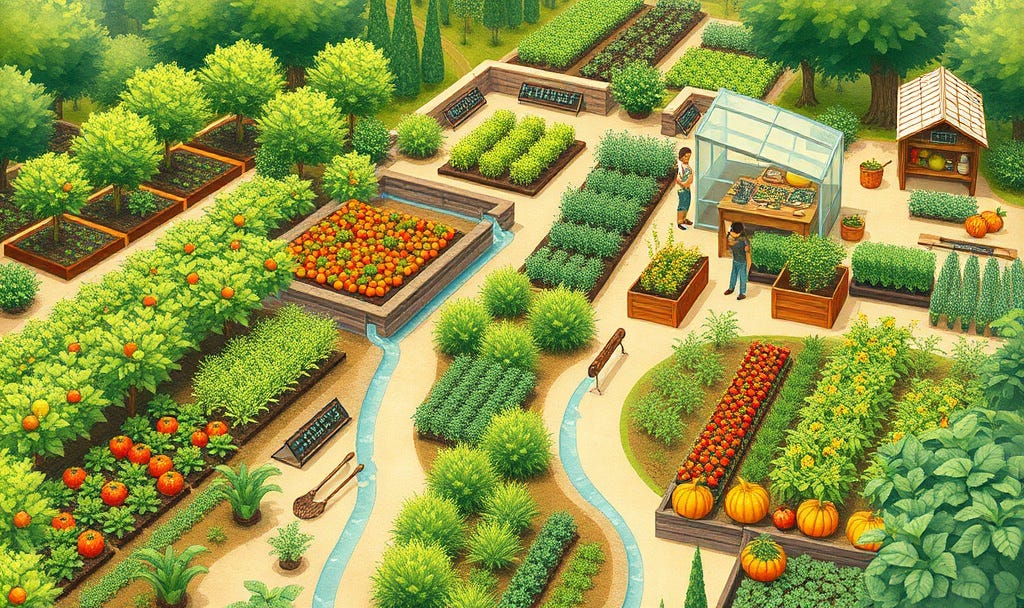
Hey friend! Welcome to the third garden space in our Genesis Framework series. Today we’re exploring The Fruitful Fields—a space dedicated to productivity, output, and bringing your creative ideas to life.
On the third day of creation, after establishing light and boundaries, God turned His attention to fruitfulness:
“Then God said, ‘Let the land produce vegetation: seed-bearing plants and trees on the land that bear fruit with seed in it, according to their various kinds.’ And it was so... And God saw that it was good.” (Genesis 1:11-12)
Notice the beautiful progression: First came light (clarity), then boundaries (structure), and now—productivity (fruitfulness). This divine sequence reveals something profound about sustainable creativity.
The Third Day Principle
What fascinates me about God’s third creative act is that it was the first time He called forth living things—vegetation, plants, and trees bearing fruit. But He didn’t just create random growth; He created intentional, productive systems that could reproduce and sustain themselves.
Each plant bore “seed according to its kind”—carrying within it the ability to multiply and produce more fruit. This wasn’t just about a one-time harvest; it was about ongoing fruitfulness.
In our creative work and digital ministry, we often approach productivity haphazardly. We create content when inspiration strikes, develop resources when we feel motivated, and serve our audiences inconsistently as our energy allows.
But God shows us a better way. After bringing light (clarity) and establishing boundaries (structure), He created systems for consistent fruitfulness—reproducible patterns that generate ongoing abundance.
Production vs. Containment
Before we dive deeper, let’s clarify the important distinction between Day 2 (The Waters Retreat) and Day 3 (The Fruitful Fields). Both involve systems, but they serve very different purposes:
The Waters Retreat focuses on CONTAINMENT—creating the boundaries, structure, and separation that protect and direct our creative energy. Think of these as the banks that channel the river.
The Fruitful Fields focuses on PRODUCTION—developing the systems, workflows, and methods that generate consistent creative output. Think of these as the irrigation systems that produce the harvest.
Without proper boundaries (Day 2), even the best productivity systems will fail. But without effective production systems (Day 3), even the strongest boundaries won’t create the fruit your ministry is meant to bear.
Systems for Sustainable Output
In The Fruitful Fields, we focus specifically on four types of production systems that support consistent, quality creative output:
Content Creation Frameworks
These systems help transform your ideas into completed content. Unlike the scattered approach of creating whenever inspiration strikes, content creation frameworks provide reliable structures for consistent production.
Think of them as templates or patterns you can return to again and again. When you have a proven framework for creating a devotional, recording a podcast, or writing a newsletter, you’re not starting from scratch each time. You’re following a path you’ve already cleared, allowing you to focus your creative energy on the content itself rather than reinventing the process.
These frameworks aren’t about formulaic content; they’re about removing unnecessary friction from the creation process. They honor the unique message God has given you while providing sustainable structures for sharing that message consistently.
Production Workflows
While frameworks focus on WHAT you create, workflows address HOW you create it—the step-by-step processes that move your content from idea to completion.
A good production workflow clarifies the stages your work moves through: ideation, drafting, refining, preparing, publishing, promoting. It defines what happens at each stage and creates clear transitions between them.
For many creative ministers, projects stall because we’re unclear about the next step or trying to handle too many stages simultaneously. Documented workflows solve this problem by breaking complex creation processes into manageable steps, allowing you to move forward consistently.
The beauty of established workflows is that they reduce decision fatigue and cognitive load. You don’t have to reinvent your process each time you create—you simply follow the path you’ve already mapped out, adapting as needed for specific projects.
Creative Productivity Tools
These are the practical tools and techniques that help you generate content consistently, overcome creative blocks, and maintain momentum in your ministry.
This might include batch creation methods where you create similar content in focused sessions, templates that provide starting points for different content types, or systems for capturing and developing ideas before they vanish.
Think of these tools as the specific implements a gardener uses—different for different tasks, but each designed to support the overall work of cultivation and harvest. The right tool makes productive work feel natural and aligned rather than forced and draining.
Content Management Systems
Creating content is one thing; organizing, tracking, and leveraging it is another. Content management systems help you maintain order in your growing collection of creative work.
These systems address how you store, categorize, and retrieve your content. They help you track what you’ve created, plan what you’ll create next, and identify opportunities to repurpose existing content in new ways.
Good content management prevents the common ministry challenge of constantly creating but never feeling organized or strategic about what you produce. It helps you see the bigger picture of your content ecosystem and how individual pieces work together to serve your audience.
Practical Productivity Systems
So how do we practically develop systems for consistent creative output? Here are some ways to tend The Fruitful Fields in your own creative life:
Create Content Templates
One of the most powerful productivity tools is a set of templates for your common content types. Rather than facing a blank page each time you create, templates provide a starting structure you can adapt and fill.
For example, you might develop templates for different types of posts, devotionals, emails, or resources. These aren’t rigid formulas but flexible frameworks that speed up your creation process while maintaining your unique voice.
Templates honor both creativity and consistency. They give you a reliable starting point without dictating the final result, allowing your unique message to flow through established channels.
Implement Batch Creation
Batch creation is a powerful approach where you group similar tasks together rather than constantly switching between different types of creative work. Instead of creating one piece of content from concept to completion before starting the next, you might:
Spend one session brainstorming ideas for multiple posts Dedicate another session to writing first drafts Use a third session for editing and refining Reserve a fourth for adding images and formatting
This approach honors the natural rhythms of your brain, allowing you to stay in a similar creative mode rather than constantly shifting gears. It reduces the startup cost of creative work and creates momentum that carries through multiple pieces.
Design Reproducible Workflows
Take time to document your creation process for different types of content. What steps do you follow from idea to published piece? Where do you tend to get stuck? What quality checks ensure your content aligns with your values?
Documented workflows aren’t about rigidity; they’re about clarity. They free your mind from having to remember every step, allowing you to focus on the creative work itself.
Your workflow might include specific tools, templates, checklists, or protocols that make your creation process smoother and more consistent. The goal isn’t perfection but intentionality—knowing what works for you and implementing it consistently.
Honor Your Creative Rhythms
Your productivity system should work with your natural creative rhythms. Each DISC personality type approaches productivity differently, and understanding your unique design helps you create systems that feel energizing rather than draining.
Some of us work best in short, focused sprints. Others need longer blocks of uninterrupted time. Some thrive with highly structured systems, while others need more flexibility and spontaneity.
To learn more about how different DISC types approach productivity, check out our DISC Foundations series.
Create a Content Calendar
A content calendar provides both structure and vision for your creative output. It helps you plan what you’ll create, when you’ll create it, and how different pieces work together to serve your audience.
Rather than deciding what to create each time you sit down to work, a content calendar gives you a broader view of your ministry and how individual pieces contribute to your overall message. It helps you maintain consistency while also creating space for seasonal themes, special topics, and inspired additions.
Your calendar doesn’t need to be complicated—it might be as simple as themes for each month or specific post types for different days of the week. The goal is intentionality rather than reactivity in your creative work.
Fruitfulness After Boundaries
Remember this important truth: fruitfulness comes after boundaries. Production follows containment.
In our productivity-obsessed world, we often try to create systems for output before establishing necessary boundaries and structure. We focus on producing more content without first creating the banks that channel our creative energy effectively.
But in God’s framework, The Fruitful Fields comes after The Waters Retreat. Production systems after boundary systems. Output after containment.
Give yourself permission to establish strong boundaries before focusing on productivity systems. To create structure before expecting an abundant harvest. To separate the waters before designing irrigation systems.
Your Fruitful Fields Reflection
I’d love to know: Which aspect of productive creativity do you find most challenging right now? Is there an area where you need better systems for consistent output?
Maybe you struggle with turning ideas into completed content. Perhaps you need clearer workflows for your creation process. Or maybe you need better systems for managing the content you’ve already created.
Remember, friend—God established systems for fruitfulness on the third day for a reason. Your productivity matters. Your creative systems serve a purpose. Your consistent output is part of God’s design for sharing the unique message He’s given you.
In the next post, we’ll explore The Luminaries Lookout, where we’ll discover how to navigate visibility, timing, and seasons in your creative ministry.
With grace and joy,
Antonisha
Explore More in the Genesis Framework:
Connect & Support
🌱 Join Our Community: Subscribe to receive The Sunday Sabbath newsletter and follow along on this soft, sacred, slow journey.
🤍 Support This Ministry:
Monthly Support: Join the Cultivator’s Circle to sustain this digital ministry with a monthly contribution.
One-Time Gift: Prefer a one-time donation? You can nurture this garden with a single contribution.
📚 Explore Resources: Discover books, assessments, and resources to support your creative journey in the Salty Page Books shop.
💬 Share Your Thoughts: I’d love to hear your perspective in the comments below.