

Day 7: The Sabbath Grove - Embracing Sacred Rest in Your Creative Ministry
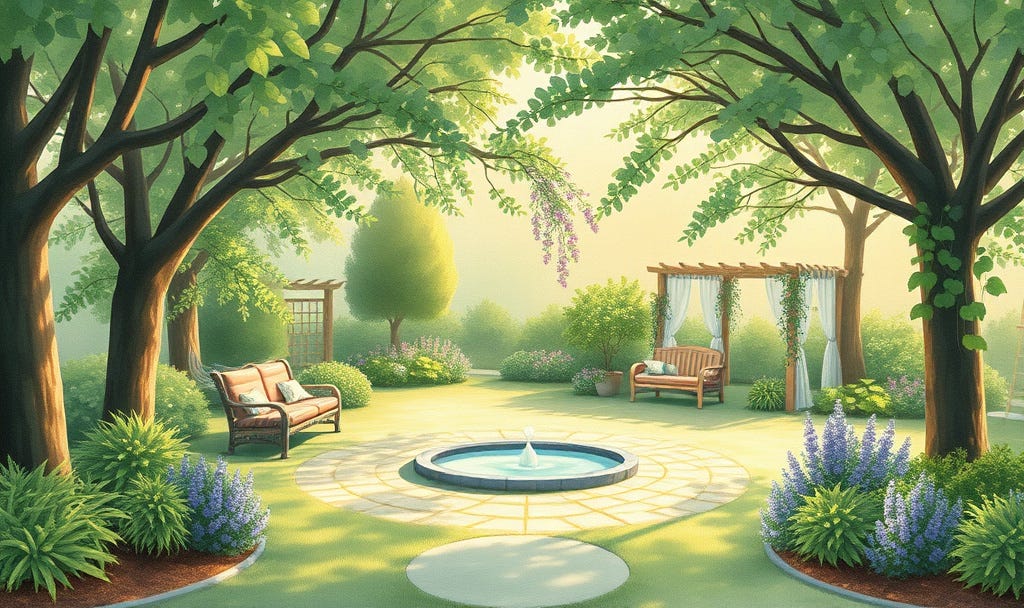
Hey friend! Welcome to the seventh and final garden space in our Genesis Framework series. Today we’re exploring The Sabbath Grove—a space dedicated to rest, renewal, and sacred pause in your creative ministry.
On the seventh day of creation, after establishing all the previous elements, God did something surprising—He rested:
“By the seventh day God had finished the work he had been doing; so on the seventh day he rested from all his work. Then God blessed the seventh day and made it holy, because on it he rested from all the work of creating that he had done.” (Genesis 2:2-3)
Notice the beautiful culmination: After light, boundaries, fruitfulness, timing, vibrant community, and faithful stewardship came rest. Not as an afterthought or a necessary recovery from exhaustion, but as an essential, blessed, and holy part of the creative process itself.
The Seventh Day Principle
What I find most profound about God’s seventh creative act is that it wasn’t an act of creation at all—it was an act of cessation, celebration, and consecration. God didn’t just stop working; He blessed this stopping and declared it holy.
This wasn’t reluctant rest or guilty relaxation but an intentional, celebrated pause. The seventh day wasn’t less important than the other six—it was their culmination and completion. Without it, the creation narrative would be incomplete.
In our creative work and digital ministry, we often struggle with this very element. We view rest as necessary recovery rather than essential completion. We see Sabbath as a luxury rather than a command. We feel guilty when we’re not producing, as if our value comes from our output rather than our identity.
But God shows us a better way. After establishing all the previous elements, He modeled sacred rest—not just as respite from work but as the purposeful culmination of work well done.
Rest as Completion
One of the most countercultural aspects of biblical rest is that it’s not just about recovery—it’s about completion. God didn’t rest because He was tired; He rested because the work was finished and good.
The Sabbath Grove invites us to see rest not as what we do when we can’t work anymore but as the intended culmination of our work. It’s not just about recharging so we can get back to “real” productivity; it’s about recognizing that rest itself is essential productivity.
Think of how a musical composition includes not just notes but rests. The rests aren’t empty spaces where nothing happens; they’re integral parts of the piece, creating rhythm, emphasis, and beauty. Without the rests, the music would be chaotic noise rather than a harmonious melody.
In the same way, the rests in our creative ministry aren’t empty spaces where nothing happens; they’re essential elements where integration, appreciation, and formation occur. They’re not interruptions to our ministry but vital components of it.
Sacred Over Secular
Notice that God didn’t just rest on the seventh day—He “blessed the seventh day and made it holy.” This rest wasn’t secular but sacred, not common but consecrated.
The Sabbath Grove reminds us that true rest isn’t just about physical recovery or mental break (though it includes these elements). It’s about sacred pause—time set apart for connection with God, appreciation of His work in and through us, and renewal of our identity as beloved children rather than productive workers.
This sacred rest stands in stark contrast to our culture’s version of “time off,” which is often filled with distraction, entertainment, and numbing rather than presence, gratitude, and renewal. True Sabbath isn’t about escaping our lives but about entering more fully into the reality of who God is and who we are in Him.
When we make our rest sacred rather than secular, we experience not just physical refreshment but spiritual formation. We’re not just recovering from work; we’re being reshaped for work that flows from our identity rather than determining our identity.
Rhythms Over Emergencies
In our always-on digital culture, rest often happens only in emergencies—when we’re burned out, exhausted, sick, or forced to stop. But God established rest as a rhythm, not an emergency response.
The Sabbath Grove invites us to build rest into the regular rhythms of our creative ministry—daily, weekly, seasonally, and annually. This isn’t about waiting until we’re depleted but about establishing sustainable patterns that prevent depletion in the first place.
These rhythms of rest aren’t luxuries for the privileged few but essential practices for anyone committed to sustainable ministry. They’re not what we do when everything else is done (it never all gets done!) but what we prioritize as part of our calling and commitment.
When rest becomes rhythmic rather than reactive, we move from a cycle of productivity and collapse to a sustainable pattern of fruitfulness and flourishing. We’re no longer driven by urgency and exhaustion but guided by intention and sufficiency.
Practical Sabbath Rhythms
So how do we practically establish sacred rest in our digital ministry? Here are some ways to tend The Sabbath Grove in your own creative life:
Daily Sabbath Moments
Create small pockets of sacred pause throughout each day—moments where you step away from productivity to remember your identity, express gratitude, and reconnect with God’s presence.
These might be brief prayer breaks, short walks outdoors, moments of meditation on Scripture, or simple rituals that help you transition between different types of work. The goal isn’t a lengthy withdrawal but an intentional presence that interrupts the constant drive to produce.
These daily Sabbath moments are like breathing—regular rhythms of receiving and releasing that sustain life and prevent suffocation. They remind us that we are human beings, not human doings.
Weekly Sabbath Practices
Establish a regular weekly Sabbath—a day or significant portion of a day set apart for rest, worship, reflection, and renewal. This isn’t just about not working but about engaging in restorative activities that reconnect you with God, others, and your true self.
Your weekly Sabbath might include worship with others, extended time in nature, meaningful connection with loved ones, creative play, or contemplative practices. The specifics matter less than the intention—setting aside regular time that’s protected from productivity and dedicated to presence.
This weekly rhythm echoes God’s pattern of creation and helps us remember that our work, while important, is not ultimate. It creates space for perspective, recalibration, and remembrance of what matters most.
Seasonal Sabbath Periods
Beyond weekly rhythms, consider establishing longer periods of intentional rest and renewal—perhaps quarterly retreats, annual vacations with spiritual focus, or sabbaticals after significant seasons of ministry.
These extended times allow for deeper restoration and reflection that can’t happen in shorter pauses. They create space for evaluation, vision-setting, and course correction that’s difficult to achieve in the midst of regular ministry rhythms.
These seasonal Sabbaths aren’t luxuries but necessities for sustainable impact. They’re investments in the longevity and depth of your ministry rather than interruptions to it.
Digital Sabbaths
Given the nature of digital ministry, consider specific boundaries around technology use—regular periods where you disconnect from devices, platforms, and online engagement to reconnect with embodied presence and unmediated experience.
These digital Sabbaths might be certain hours each day, specific days each week, or designated periods throughout the year when you step away from screens and online interaction. They help prevent the constant urgency and comparison that digital spaces can foster while creating space for deeper presence and perspective.
In a world of constant connectivity, intentional disconnection becomes a radical act of self-care and spiritual formation. It reminds us that our value isn’t in our online presence but in our identity as beloved children of God.
Honor Your Personality Design
Your approach to Sabbath should align with your unique personality design. Different DISC types naturally approach rest and renewal in different ways.
Some personalities rest through active engagement in different activities, while others need complete withdrawal and quiet. Some find renewal through social connection, while others recharge through solitude. Some need structured rest, while others thrive with more spontaneous approaches.
To learn more about how different DISC types approach rest and renewal, check out our DISC Foundations series.
Sabbath After Stewardship
Remember this important truth: rest comes after all the other elements have been established. Sabbath follows stewardship. Pause follows productivity.
In our productivity-obsessed world, we often get this backward. We view rest as something to fit around our work rather than the culmination of our work. We see Sabbath as optional rather than essential, negotiable rather than non-negotiable.
But in God’s framework, The Sabbath Grove comes after The Stewardship Sanctuary. Rest after resource management. Sacred pause after multiplication.
Give yourself permission to embrace rest as the completion of your work rather than competition with your work. To view Sabbath as essential rather than extra. To see sacred pause not as what happens when everything else is done but as what makes everything else meaningful and sustainable.
Your Sabbath Grove Reflection
I’d love to know: What aspect of sacred rest feels most challenging to you right now? Where do you sense God inviting growth in your Sabbath practices?
Maybe you struggle with daily pauses amid constant demands. Perhaps weekly Sabbath feels impossible in your current season. Or maybe you need extended rest after a particularly intense period of ministry.
Remember, friend—God established, blessed, and made holy the seventh day for a reason. Your rest matters. Your Sabbath serves a purpose. Your sacred pause is part of God’s design for sustainable, life-giving creative ministry.
Bringing Our Garden Journey Full Circle
As we complete our exploration of the Genesis Framework, I’m reminded of how each garden space builds upon and complements the others. This isn’t a random collection of principles but an intentional progression that mirrors God’s own creative work.
From the clarity of The Light Garden to the boundaries of The Waters Retreat, from the productivity of The Fruitful Fields to the timing of The Luminaries Lookout, from the community of The Living Waters to the stewardship of The Stewardship Sanctuary, and finally to the sacred rest of The Sabbath Grove—each element is essential to sustainable, faithful creative ministry.
This framework isn’t about rigid formulas but divine wisdom. It’s not about mechanistic steps but organic growth. It’s about aligning our creative work with God’s design rather than forcing our ministry into cultural patterns that lead to burnout and fragmentation.
My prayer is that these garden spaces become familiar places you return to again and again—not just as concepts you understand but as environments you inhabit and tend in your own creative ministry.
May your work be filled with clarity, contained by healthy boundaries, fruitful through sustainable systems, guided by divine timing, enriched by authentic community, multiplied through faithful stewardship, and completed through sacred rest.
Thank you for joining me on this journey through the Genesis Framework. I’d love to hear how these principles are shaping your approach to creative ministry and which garden spaces are particularly meaningful in your current season.
With grace and joy,
Antonisha
Explore All of the Genesis Framework:
Connect & Support
🌱 Join Our Community: Subscribe to receive The Sunday Sabbath newsletter and follow along on this soft, sacred, slow journey.
🤍 Support This Ministry:
Monthly Support: Join the Cultivator’s Circle to sustain this digital ministry with a monthly contribution.
One-Time Gift: Prefer a one-time donation? You can nurture this garden with a single contribution.
📚 Explore Resources: Discover books, assessments, and resources to support your creative journey in the Salty Page Books shop.
💬 Share Your Thoughts: I’d love to hear your perspective in the comments below.
I resonate with what you wrote... rest as esential completion is genius.