

The D-Type Cultivator: Decisive Direction in Your Ministry
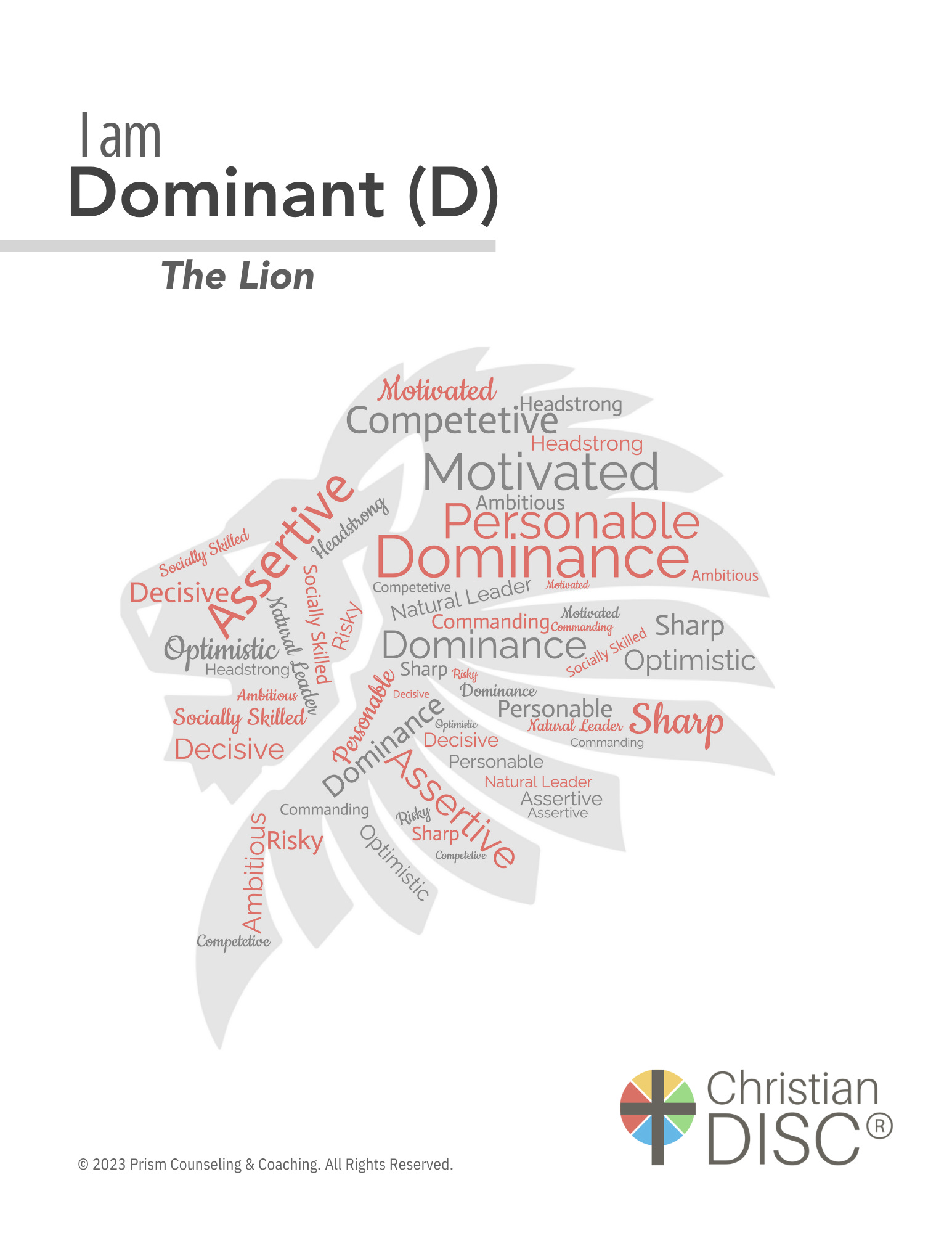
Hey friend! Today, we’re exploring the D-Type personality in our Sacred Design series. If you or someone you work closely with has strong Dominant tendencies, this post will help you understand how God uniquely designed this personality for His purposes.
New to the DISC personality framework? Check out our Sacred Design: The Cultivator’s DISC Personality Guide for an overview of all four types and the biblical foundation for understanding personality in ministry.
D-types are the decisive, direct, driven personalities who naturally take charge and move things forward. They’re the mountain climbers of the personality world—boldly setting their sights on peaks and pursuing them with determination and courage.
The D-Type: Bold Vision and Action
The Dominant personality is characterized by a natural orientation toward results, action, and decisive leadership. D-types tend to be direct and straightforward in communication, focused on bottom-line results, and quick to make decisions. They’re comfortable taking charge, oriented toward the future and possibilities, willing to take risks and face challenges, and motivated by accomplishment and achievement.
When you meet a D-type, you’ll often notice their confidence, their clarity about what they want, and their willingness to take bold action to achieve it. They don’t shy away from challenges but often lean into them, seeing obstacles as problems to be solved rather than barriers to avoid.
Biblical Examples of D-Types
Scripture gives us several powerful examples of D-type personalities whom God used in mighty ways:
Paul demonstrated classic D-type traits in his bold proclamation of the gospel, his strategic missionary journeys, and his direct communication style. His letters often reflect the straightforward, results-oriented approach typical of D-types.
Nehemiah shows D-type qualities in how he assessed the situation in Jerusalem, developed a plan, motivated others to join him, and persistently pursued the rebuilding of the wall despite opposition.
Martha exhibits D-type tendencies in her task-focused approach, her directness with Jesus about Mary’s lack of help, and her practical orientation to getting things done.
These biblical examples remind us that God has always used D-type personalities to accomplish His purposes, particularly when decisive action and bold leadership were needed.
Core Strengths: How D-Types Reflect God’s Character
D-type personalities beautifully reflect certain aspects of God’s character. Their strengths aren’t accidental but purposefully designed to display these divine attributes.
When God created D-types with decisive leadership abilities, He was equipping them to reflect His own sovereign leadership in the world. Just as God decisively acts in history according to His purposes, D-types naturally make clear decisions and take definitive action. We see this in Jeremiah 29:11 where God declares, “For I know the plans I have for you... plans to give you hope and a future.” This confident, forward-moving leadership is a gift that allows ministries to move beyond discussion into faithful action.
The visionary nature of D-types mirrors God’s ability to see what could be and initiate action to bring it about. Their natural orientation toward the future and possibilities echoes God’s creative and initiating character. We hear this in Isaiah 43:19 when God says, “See, I am doing a new thing! Now it springs up; do you not perceive it?” D-types often perceive these new things and help others catch the vision of what could be.
Perhaps one of the most valuable gifts D-types bring to ministry is their courage and boldness. Their willingness to face challenges head-on reflects God’s courage and power. The comfort with risk and confrontation when necessary displays aspects of God’s fearlessness and strength. God reminded Joshua of this trait when He said, “Be strong and courageous. Do not be afraid; do not be discouraged, for the LORD your God will be with you wherever you go” (Joshua 1:9). When ministries face difficult decisions or challenging circumstances, D-types often step forward with this same courage.
Finally, D-types reflect God’s purposefulness and completion of what He begins through their results orientation. Their focus on outcomes and achievement mirrors God’s commitment to accomplishing His purposes and bringing His plans to fruition. As Philippians 1:6 reminds us, God is “confident of this, that He who began a good work in you will carry it on to completion until the day of Christ Jesus.” D-types help ministries maintain this focus on completing what God has called them to do.
When D-types embrace and steward these strengths with humility, they become powerful instruments for God’s kingdom work, driving initiatives forward and helping ministries achieve their God-given mission.
Growth Areas: Biblical Wisdom for Development
Every personality has areas where growth and balance are needed. For D-types, certain tendencies may need to be tempered with biblical wisdom and complementary virtues.
While D-types naturally excel at achieving results, they sometimes focus on tasks at the expense of relationships. God reminds us in Philippians 2:3-4 to “Do nothing out of selfish ambition or vain conceit. Rather, in humility value others above yourselves, not looking to your own interests but each of you to the interests of others.” Growing in awareness of how their drive affects others and intentionally cultivating relational skills brings needed balance to the D-type’s results orientation.
The direct communication style that serves D-types well in many situations can occasionally come across as blunt or insensitive. Colossians 4:6 encourages us to “Let your conversation be always full of grace, seasoned with salt, so that you may know how to answer everyone.” D-types grow significantly when they learn to combine their natural truth-telling with grace, adding gentleness to their strength without losing their clarity.
The D-type’s desire for quick results can sometimes lead to impatience with processes and people. James 1:19 offers wisdom here: “My dear brothers and sisters, take note of this: Everyone should be quick to listen, slow to speak and slow to become angry.” Developing deeper listening skills and patience with different perspectives enriches the D-type’s leadership and helps them capture insights they might otherwise miss.
Finally, D-types often find it easier to do things themselves than to involve others. They may struggle with true collaboration and delegation, limiting both their impact and the development of others. Ecclesiastes 4:9 reminds us that “Two are better than one, because they have a good return for their labor.” Learning to truly collaborate, delegate effectively, and develop other leaders expands the D-type’s kingdom impact exponentially.
These growth areas aren’t weaknesses to be ashamed of but opportunities for D-types to become more complete reflections of Christ’s character, combining their natural strengths with complementary virtues that create a more balanced and effective ministry presence.
Relationship Dynamics: How D-Types Interact with Others
Understanding how D-types relate to each of the four personality tendencies can help create healthier team dynamics and more effective ministry partnerships.
When two D-types work together, there’s often high energy and rapid progress as both bring decisive action and clear direction to the table. However, this pairing can also create potential conflict over control and authority. Success comes when they clearly define areas of responsibility, maintain mutual respect through direct communication, and focus on shared goals rather than personal territory. When D-types learn to value each other’s strengths and perspectives rather than competing, they can form powerful partnerships that drive significant ministry impact.
The D-type and I-type pairing combines decision with inspiration in a dynamic blend. D-types typically appreciate the I-type’s enthusiasm and people skills, while I-types value the D-type’s clarity and action orientation. This relationship thrives when D-types give I-types room for creative expression and relationship building, while I-types help D-types communicate vision in engaging, inspiring ways. Together, they create ministry approaches that are both action-oriented and engaging, balancing results with team morale and enthusiasm.
When D-types and S-types collaborate, they bring together pace-setting and peace-keeping temperaments. Potential tension can arise around the speed of change and the focus on people versus tasks. However, beautiful complementary strengths emerge when D-types take time to communicate the “why” behind changes and decisions, while S-types help D-types consider how implementation impacts people. The D-type learns to appreciate the S-type’s loyalty and consistent support, while the S-type helps moderate the D-type’s pace for more sustainable progress that brings everyone along.
The D-type and C-type combination merges action with accuracy in productive ways. D-types value the C-type’s attention to detail and quality, while C-types appreciate the D-type’s decisiveness and ability to move projects forward. This partnership works especially well when D-types allow time for C-types to analyze and verify information before action, while C-types present data and concerns in direct, bottom-line formats that respect the D-type’s time orientation. As both focus on their shared commitment to quality results, they create ministry initiatives that are both timely and excellent.
Understanding these dynamics helps D-types build stronger relationships and more effective ministry teams, leveraging the strengths of each personality rather than creating unnecessary friction.
The D-Type in the Garden Spaces
Let’s explore how D-types naturally navigate each area of our Genesis Framework and how they can thrive in each garden space.
In The Light Garden (Vision & Purpose)
D-types often excel in The Light Garden, as they’re naturally oriented toward vision, purpose, and clarity. They quickly grasp the big picture and feel energized by defining direction. Their ability to readily identify vision and focus on desired outcomes serves their ministry well in this space.
However, even in this natural strength area, D-types benefit from growth opportunities. Taking time to ensure vision comes from God, not just personal ambition, helps ground their direction in divine purposes. Including others in the vision-forming process enriches the outcome and creates broader ownership. Creating space for reflection rather than rushing to action helps ensure the vision is fully formed before implementation begins.
In The Waters Retreat (Boundaries & Structure)
D-types have mixed experiences in The Waters Retreat. They appreciate clear structures that facilitate progress but may resist boundaries that slow their pace. Their strengths shine in creating clear systems for decision-making, establishing direct communication channels, and defining roles and responsibilities with clarity.
Growth in this garden space comes as D-types learn to honor personal boundaries for sustainable ministry. Creating space for relationships alongside tasks ensures their systems serve people, not just objectives. Learning to respect others’ boundaries and work styles helps D-types create structures that work for diverse teams, not just their own preferences.
In The Fruitful Fields (Productivity & Output)
D-types thrive in The Fruitful Fields, as they’re naturally oriented toward results, productivity, and tangible outcomes. Their ability to drive projects to completion, maintain focus on key priorities, and overcome obstacles to productivity makes them naturally fruitful in ministry contexts.
Even in this strength area, growth opportunities exist. Balancing quantity with quality ensures the fruit produced is excellent, not just abundant. Establishing sustainable production rhythms prevents burnout for both themselves and their teams. Involving others in collaborative creation broadens ownership and diversifies the harvest of ministry.
In The Luminaries Lookout (Visibility & Timing)
D-types approach The Luminaries Lookout with confidence but may struggle with patience regarding timing and natural rhythms. Their strengths in boldly sharing their work and message, taking initiative in platform building, and leading through visibility challenges serve their ministry well in this space.
Growth comes as D-types develop discernment between God’s timing and personal timelines. Learning to balance promotion with humility ensures their light points to Christ rather than themselves. Honoring seasonal rhythms in ministry creates sustainability for the long journey, while sharing the spotlight with others multiplies impact beyond their personal reach.
In The Living Waters (Community & Expression)
The Living Waters presents both challenges and opportunities for D-types, as it focuses on areas that may not be their natural strength. They bring valuable gifts in creating clear community structures, initiating gatherings, and speaking truth directly and clearly.
Growth in this garden space comes through developing deeper listening skills that balance their natural speaking abilities. Creating space for others’ voices and stories enriches the community beyond functional roles. Building relationships that go deeper than task orientation creates meaningful connections, while embracing appropriate vulnerability in community models authentic leadership.
In The Stewardship Sanctuary (Resources & Multiplication)
D-types often excel in The Stewardship Sanctuary, with their natural orientation toward growth, multiplication, and effective resource management. They make clear resource allocation decisions, develop strategic growth plans, and address financial challenges with confidence.
Growth opportunities in this space include ensuring ethical approaches to monetization that honor ministry values. Developing others rather than doing everything personally creates a legacy beyond personal capacity. Balancing growth goals with sustainability ensures long-term impact rather than short-term gains at the expense of people or resources.
In The Sabbath Grove (Rest & Renewal)
The Sabbath Grove often presents the greatest challenge for D-types, as their action orientation can make true rest difficult. Yet they bring strengths even to this space through creating clear boundaries between work and rest and making rest a non-negotiable priority once they understand its importance.
Growth in this garden space comes through embracing rest without guilt or productivity pressure. Finding identity in being rather than doing addresses the deeper heart issues that make rest challenging. Experiencing God’s presence without an agenda allows for genuine renewal, while embracing unstructured, unproductive time creates space for creativity and perspective that structured activity cannot provide.
Practical Recommendations for D-Type Ministers
If you have D-type tendencies, here are some practical recommendations to help you steward your unique design for maximum kingdom impact:
Your decisive leadership is a gift from God—don’t minimize it or apologize for it. Instead, steward it with humility, recognizing that your strength comes from Him and is given for serving others, not self-promotion. Consider creating regular practices that ground your leadership in humility, such as seeking feedback from trusted advisors, acknowledging others’ contributions, and sharing credit for successes. Remember that Jesus, the ultimate leader, came not to be served but to serve—a powerful model for D-type leadership.
Intentionally cultivate virtues that balance and enhance your natural strengths. This might look like practicing active listening without interrupting, scheduling unhurried time with key relationships, asking open-ended questions rather than making statements, or celebrating the journey rather than just the destination. These complementary virtues don’t diminish your D-type strengths but enhance them, creating a more complete reflection of Christ’s character in your leadership.
Consider surrounding yourself with people who complement your personality rather than duplicate it. Include detail-oriented C-types for quality control, people-focused S-types for relational wisdom, and enthusiastic I-types for communication and inspiration. Create a safe space for these different perspectives to be heard, even when they slow down your preferred pace. The body of Christ functions best when different parts work together, each honoring the others’ unique contributions.
Your action orientation means you may need intentional structures for reflection. Consider scheduling regular retreat days for vision-seeking and listening, building reflection questions into project planning and reviews, or keeping a leadership journal to process decisions and learnings. These practices help ensure your activity flows from divine guidance rather than merely human effort or ambition.
Protect yourself from burnout by creating rhythms that honor your humanity. Set clear boundaries between work and rest, schedule recovery time after high-intensity periods, and build margin into your calendar for unexpected needs. Identify activities that truly renew you—not just different forms of productivity disguised as rest—and prioritize them as essential to your ministry effectiveness.
Develop communication habits that maintain your directness while adding to the relationship. Share the “why” behind decisions, not just the “what,” check for understanding and invite questions, and be aware of your pace and tone in high-stress situations. Consider adjusting your communication style for different personality types, recognizing that what works well for fellow D-types may not serve S-types or C-types effectively.
Finally, consider expanding your definition of success beyond just results. Evaluate both outcomes and relationships, consider long-term sustainability rather than just short-term wins, and measure spiritual formation alongside strategic accomplishments. Value faithful process as much as fruitful outcomes, remembering that God often works in ways that aren’t immediately visible or measurable.
Want to Know Your Type for Sure?
While reading the profiles can help you identify your likely tendencies, a professional assessment provides a more accurate and nuanced understanding of your specific personality blend.
I offer the Christian DISC Assessment, which provides a comprehensive report of your personality tendencies, including:
Your specific blend of all four types
Detailed insights about your natural strengths
Biblical perspectives on your personality
Personalized growth recommendations
Communication tips for different relationships
This assessment creates a solid foundation for understanding how to align your ministry and creative work with your God-given design.
Embracing Your D-Type Design
Friend, if you have D-type tendencies, remember that God created you with your decisive, direct, driven personality for a purpose. Your ability to see clearly, act boldly, and lead decisively reflects important aspects of His character and serves vital functions in His kingdom.
The world needs D-type cultivators who can:
Make difficult decisions when others hesitate
Take bold action in the face of challenges
Drive important initiatives forward
Lead with clarity and conviction
Your personality isn’t a mistake or a liability—it’s a divine design, crafted with intention and purpose. When you embrace your D-type tendencies while growing in complementary virtues, you become a powerful instrument in God’s hands, accomplishing significant kingdom work with both effectiveness and grace.
As you continue your ministry journey, remember that the goal isn’t to become less of a D-type but to become a more complete, Christ-like version of the D-type God created you to be—combining your natural strengths with spiritual maturity and relational wisdom.
With grace and joy,
Antonisha
Explore More in the Sacred Design Series:
The I-Type Cultivator: Inspirational Connection in Your Ministry
The C-Type Cultivator: Compliant Excellence in Your Ministry
Connect & Support
🌱 Join Our Community: Subscribe to receive The Sunday Sabbath newsletter and follow along on this soft, sacred, slow journey.
🤍 Support This Ministry:
Monthly Support: Join the Cultivator’s Circle to sustain this digital ministry with a monthly contribution.
One-Time Gift: Prefer a one-time donation? You can nurture this garden with a single contribution.
📚 Explore Resources: Discover books, assessments, and resources to support your creative journey in the Salty Page Books shop.
💬 Share Your Thoughts: I’d love to hear your perspective in the comments below.